The Best Low-Maintenance Landscaping for Minnesota Homes
LUCAS NELSON • August 24, 2026
A well-designed yard should complement your home without requiring constant watering, weeding, trimming, and repairs. The best low-maintenance landscaping in Minnesota uses durable materials, practical planting layouts, clearly defined beds, and proper water management to reduce recurring yard work.
Minnesota’s changing seasons also need to be considered. Landscape features must handle summer heat, heavy rain, snowmelt, and freezing winter temperatures while remaining functional and attractive throughout the year.
Keep the Landscape Design Simple
One of the best ways to reduce maintenance is to avoid an overly complicated layout. Numerous small beds, narrow lawn strips, and scattered plants can make mowing, trimming, watering, and seasonal cleanup more difficult.
Effective low-maintenance landscape design ideas often include:
- Larger, clearly defined planting beds
- Plants grouped according to similar growing conditions
- Open lawn areas that are easy to mow
- Clean borders around beds and walkways
- Durable materials that do not need frequent replacement
A simple design can still provide texture, color, and curb appeal. The difference is that every plant and feature is placed with long-term care and accessibility in mind.
Choose Hardy Plants and Trees
Plants that fit the property’s sunlight, soil, moisture, and available space are generally easier to manage. Poorly placed plants may struggle to grow, require additional watering, or need frequent pruning when they become too large for the area.
Using native plants in Minnesota landscaping can help create a yard that is better suited to local growing conditions. Hardy shrubs, trees, grasses, and perennials can be arranged in structured groups rather than scattered throughout the property.
When developing a planting layout, consider:
- The mature height and width of each plant
- How much sunlight the area receives
- Whether the soil stays wet or dries quickly
- How plants will look during different seasons
- How easily the bed can be accessed for routine care
Selecting fewer plant varieties and repeating them throughout the landscape can also create a more cohesive appearance.
Use Drought-Tolerant Plants in Sunny Areas
Some parts of a yard dry out faster than others, particularly south-facing beds, open slopes, and areas exposed to afternoon sun. Adding drought-tolerant plants for Minnesota in these locations can reduce watering needs once the plants become established.
New plants still require regular watering during their establishment period. However, matching the plants to the site can make the finished landscape easier to care for over time.
Drought-tolerant planting areas can be combined with mulch or decorative stone to reduce exposed soil and create a cleaner, more organized appearance.
Replace Mulch With Decorative Rock Where Appropriate
Mulch is useful for protecting soil, retaining moisture, and defining planting beds. However, it gradually breaks down and must be refreshed to maintain its depth and appearance.
River rock, gravel, and decorative stone provide a longer-lasting alternative for homeowners seeking easy-care yard landscaping. These materials work particularly well around foundations, entryways, slopes, and structured planting beds.
| Material | Maintenance Considerations |
|---|---|
| Mulch | Helps retain moisture but requires periodic replacement |
| River rock | Creates a durable, finished surface around planting beds |
| Decorative gravel | Works well in borders, pathways, and dry areas |
| Boulders | Add permanent structure and visual interest |
| Mixed rock beds | Combine different stone sizes for texture and definition |
Rock should be installed over a properly prepared bed with defined edging. This helps contain the material and reduces the likelihood of rock spreading into the lawn.
Create a Low-Maintenance Rock Garden
Rock gardens can add texture and structure without filling the yard with high-maintenance plants. Decorative stone, river rock, gravel, boulders, edging, and selected plants can be combined to create a feature that remains attractive through Minnesota’s changing seasons.
A rock garden may work well in:
- Foundation beds
- Sloped sections of the yard
- Areas where grass grows poorly
- Front entry landscapes
- Spaces affected by runoff or erosion
The design should still account for drainage and plant placement. Proper bed preparation helps the materials remain organized and reduces future cleanup.
Install Defined Landscape Edging
Landscape edging separates grass from mulch, decorative rock, walkways, driveways, and planting beds. Without a defined border, grass can spread into beds while rock and mulch migrate into the lawn.
Clean edging also makes mowing and trimming more manageable. It creates a finished appearance while helping each landscape material remain within its intended area.
For a low-maintenance design, use simple bed shapes rather than tight curves and narrow corners. Wider, smoother borders are generally easier to maintain with standard lawn equipment.
Keep Lawn Areas Practical
A lawn can still be part of a low-maintenance yard when it is installed in areas where grass can grow successfully. The goal is not necessarily to eliminate turf but to avoid placing it in narrow, shaded, steep, or consistently wet areas.
New sod can restore damaged or bare areas and create a more uniform lawn. Proper topsoil preparation and grading are important because uneven ground, poor soil, and drainage problems can make even a new lawn difficult to maintain.
Consider replacing difficult lawn sections with:
- Expanded planting beds
- Decorative rock
- Mulch
- Rock gardens
- Walkways
- Retaining features
This creates a cleaner layout and reduces the amount of awkward mowing and trimming required.
Address Grading and Drainage Problems
Standing water, erosion, and runoff can create recurring maintenance problems. Excess water may damage grass, weaken plants, move mulch, wash out soil, and cause decorative rock to shift.
Grading can reshape the ground to improve water movement, while drainage systems can direct runoff away from problem areas. The right solution depends on the property’s elevation, soil conditions, downspouts, and where water collects after storms or snowmelt.
Drainage concerns should be addressed before installing new sod, planting beds, or hardscape features. Correcting the underlying water problem helps protect the rest of the landscape.
Add Durable Walkways and Patio Areas
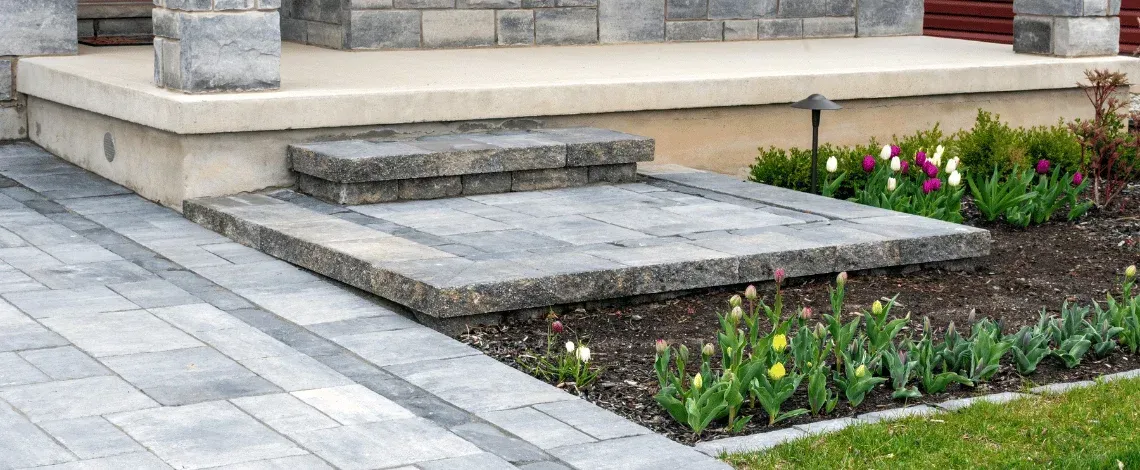
Paver patios and walkways can make a yard more usable while reducing the amount of planted or grass-covered space that requires routine care. A defined walkway can also prevent worn paths, muddy areas, and repeated lawn repairs.
Paver surfaces require occasional cleaning and joint maintenance, but they do not need watering, mowing, or pruning. Proper base preparation and grading are especially important in Minnesota, where freeze-thaw cycles can affect outdoor surfaces.
Retaining walls may also improve a low-maintenance landscape by supporting soil, controlling erosion, and organizing sloped areas. Block, boulder, or natural stone walls can create defined sections that are easier to plant and maintain.
Low-Maintenance Front Yard Ideas for Minnesota
A practical front yard does not need numerous plant varieties or elaborate features. A simple plan can create curb appeal while keeping seasonal work manageable.
Consider combining:
- A wide foundation bed with hardy shrubs and plants
- Mulch or decorative river rock around the plantings
- Clean edging between the bed and lawn
- A paver walkway leading to the entrance
- Open sod areas with simple mowing lines
- Grading or drainage improvements where water collects
These low-maintenance front yard ideas for Minnesota create a balanced appearance without making the landscape unnecessarily complicated.
Create a Yard That Fits Your Schedule
The best landscaping for busy homeowners in Minnesota is designed around the amount of time they realistically want to spend on yard care. Durable ground covers, properly placed plants, defined edging, practical lawn areas, and stable hardscape features can significantly reduce recurring maintenance.
LN Landscaping can help homeowners develop low-maintenance landscaping in North Branch, MN, using a thoughtful combination of planting layouts, mulch, decorative rock, edging, sod, grading, drainage, patios, walkways, and retaining walls.
Contact us today to plan an outdoor space that looks polished, functions well, and is easier to manage throughout the seasons.
Recent Posts