Signs Your Yard Needs a Retaining Wall: Natural Stone vs. Block
LUCAS NELSON • August 10, 2026
A sloped yard can lead to erosion, shifting soil, and areas that are difficult to maintain. When these problems continue after heavy rain or snowmelt, a retaining wall may help stabilize the landscape and create a cleaner transition between elevations.
The right retaining wall material depends on the slope, site access, surrounding landscape, and the appearance you want. Natural stone, boulders, and manufactured block each offer different advantages.
Common Signs You Need a Retaining Wall
Some yard problems can be corrected with grading or drainage work, while others require added support along a slope. A retaining wall may be worth considering when several of these issues appear:
- Soil repeatedly washes downhill
- Exposed roots or erosion channels appear
- Mulch, rock, or topsoil moves out of place
- The slope is difficult to mow or maintain
- Parts of the yard are sinking or shifting
- An existing retaining wall is leaning or separating
- The yard needs flatter, more defined areas
These signs often become more noticeable during heavy rainfall and spring snowmelt. A proper site evaluation can determine whether the yard needs a retaining wall, grading, drainage improvements, or a combination of solutions.
How a Retaining Wall Helps
A retaining wall holds soil at different elevations and creates a defined edge along a slope. It can also improve the layout of the yard and make difficult areas easier to maintain.
A retaining wall may help:
- Reduce soil erosion
- Contain decorative rock or topsoil
- Create flatter landscape sections
- Support sloped areas
- Replace a damaged or failing wall
- Improve the transition between upper and lower areas
The wall must be installed on a properly prepared base with suitable backfill and drainage. These details are especially important in Minnesota, where freeze-thaw cycles and snowmelt can affect soil movement.
Natural Stone vs. Block Retaining Walls
Natural stone, boulders, and manufactured block can all provide effective soil support. The main differences involve appearance, layout flexibility, installation requirements, and how the wall fits the surrounding landscape.
| Consideration | Natural Stone or Boulder | Manufactured Block |
|---|---|---|
| Appearance | Natural, textured, and irregular | Clean, uniform, and structured |
| Best Fit | Wooded yards, rock landscaping, and broad slopes | Defined beds, smaller spaces, and formal landscapes |
| Wall Shape | Natural curves and larger wall sections | Precise curves, corners, and tiered layouts |
| Material Size | Large and varied | Consistent and predictable |
| Site Access | Often requires room for heavy equipment | Depends on wall size and location |
| Design Style | Rustic or organic | Traditional or contemporary |
Neither option is automatically better. The best choice depends on the property layout, wall height, equipment access, surrounding materials, and the preferred finished appearance.
When Natural Stone or Boulder Works Best
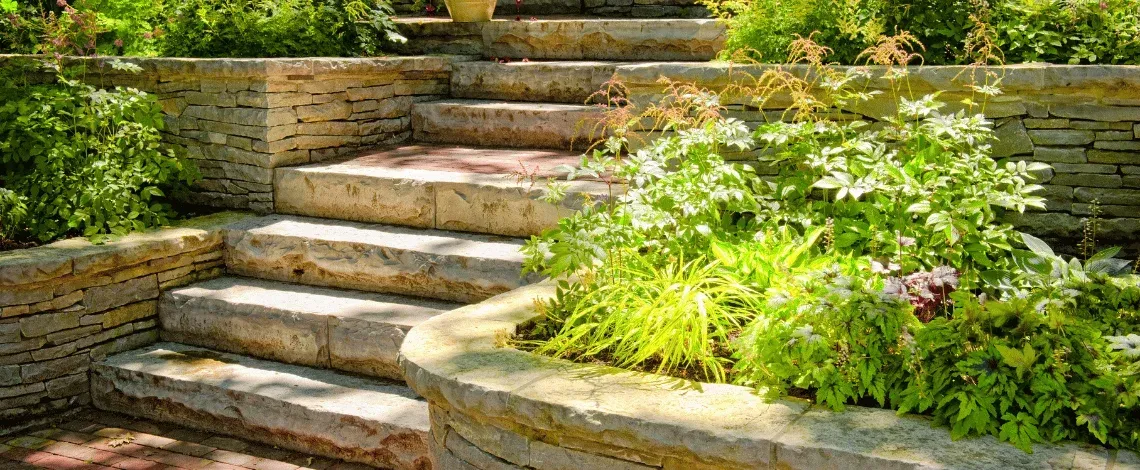
Natural stone and boulders are often a good fit when the wall should blend into the surrounding landscape. Their varying shapes and textures complement wooded properties, decorative rock, and less formal yard designs.
This option may work well when:
- The yard has a natural or rustic appearance
- The wall follows a broad slope
- The site has enough access for larger materials
- The wall should coordinate with existing stone or boulders
Because every stone is different, the finished wall will have a more organic and less uniform appearance.
When Block Works Best
Manufactured block is commonly used when homeowners prefer consistent lines and a more structured design. Its uniform size allows for defined curves, corners, and tiered wall layouts.
Block may be the better option when:
- The yard has a more formal landscape design
- The wall requires precise corners or curves
- The space is more compact
- A consistent color and texture are preferred
Block retaining walls still require proper excavation, base preparation, backfill, and drainage. Correct installation helps reduce movement as the ground freezes and thaws.
What Affects Retaining Wall Cost in Minnesota?
Retaining wall cost in Minnesota varies because every yard has different conditions. Material selection matters, but excavation, access, drainage, wall height, and site preparation can also affect the final estimate.
Common pricing factors include:
- Wall length and height
- Block, boulder, or natural stone selection
- Excavation and grading requirements
- Equipment access
- Soil removal or relocation
- Base and backfill preparation
- Drainage needs
- Curves, caps, or multiple tiers
An on-site estimate provides the most accurate pricing because it accounts for the actual slope, soil conditions, access, and installation requirements.
Plan the Right Retaining Wall for Your Yard
A retaining wall may be needed when erosion, shifting soil, or a difficult slope begins affecting the property. Choosing the right material and preparing the site correctly can create a wall that fits both the yard and the surrounding landscape.
LN Landscaping can help you plan a retaining wall that matches your property’s slope, layout, and preferred style.
Contact us today to schedule an evaluation for retaining wall installation in North Branch, MN.
Recent Posts